

Table of Contents
- Why Remote Hiring Requires a Different Approach
- Define Clear Remote Work Expectations Before You Hire
- Remote Interview Questions That Assess Real Capability
- Best Platforms to Hire Remote Workers Efficiently
- Build Your Remote Onboarding Checklist for Success
- Establish Communication Strategies for Virtual Teams
- Create Performance Metrics That Work for Remote Staff
- Common Mistakes When Hiring Remote Office Staff
Tips for Hiring Remote Office Staff: A 2026 Guide
Last Updated: July 8, 2026
Remote hiring has fundamentally changed how businesses build teams. The most common challenge isn’t finding remote talent, it’s hiring the right remote talent. Your interview process, onboarding, and management expectations need to reflect how distributed teams actually work.
This guide covers strategies that separate successful remote hires from costly mistakes: defining expectations before posting a job, asking the right interview questions, building effective onboarding systems, and creating communication structures that prevent isolation. Companies getting this right report significantly smoother integration and higher retention rates than those treating remote hiring like a traditional office process.
Why Remote Hiring Requires a Different Approach
Remote hiring isn’t office hiring done from home. The skill set changes. When you hire someone for your office, you’re hiring for presence and availability. When you hire someone remote, you’re hiring for autonomy, communication clarity, and self-direction. A brilliant office employee who needs constant feedback will fail remotely. An independent operator who communicates well in writing will thrive.
The biggest mistake is using the same screening process for both. Remote hiring requires documentation, clarity, and structured assessment because you won’t have daily visibility into how someone works. Reverse-engineer from the role’s actual demands: What does this person do when no one’s watching? What decisions do they need to make without waiting for approval? Those are the traits you’re screening for.
The single biggest predictor of remote hiring success is how someone communicates in writing and handles asynchronous feedback. Test this explicitly during interviews.
Define Clear Remote Work Expectations Before You Hire
You cannot over-communicate expectations with remote staff. Ambiguity kills remote relationships faster than almost anything else.
Before you write the job description, answer these questions in writing:
Set expectations around time zones and availability. If hiring across time zones, be explicit about core hours. "Core hours 9 AM-1 PM EST" is clear. "Flexible schedule" sets up conflict later. Decide whether this role needs real-time availability or can work fully asynchronous. Document your response time expectations. If someone emails you at 5 PM, when do they need to respond? Next morning? Within 24 hours? What’s the escalation path for urgent issues?
Clarify asynchronous vs. synchronous communication needs. Most remote teams mix both. Synchronous communication (meetings, Slack) should be scheduled and purposeful. Asynchronous communication (emails, documented decisions) should be the norm. Specify which meetings are mandatory and which are optional. Home services companies often struggle here because office culture runs on quick verbal check-ins. Remote doesn’t work that way. You need written documentation of decisions, project status, and customer information.
Companies with the smoothest remote operations have a written communication protocol before they hire their first remote employee. This document becomes your interview reference and onboarding guide.
Remote Interview Questions That Assess Real Capability
Standard interview questions don’t reveal how someone will actually perform remotely.
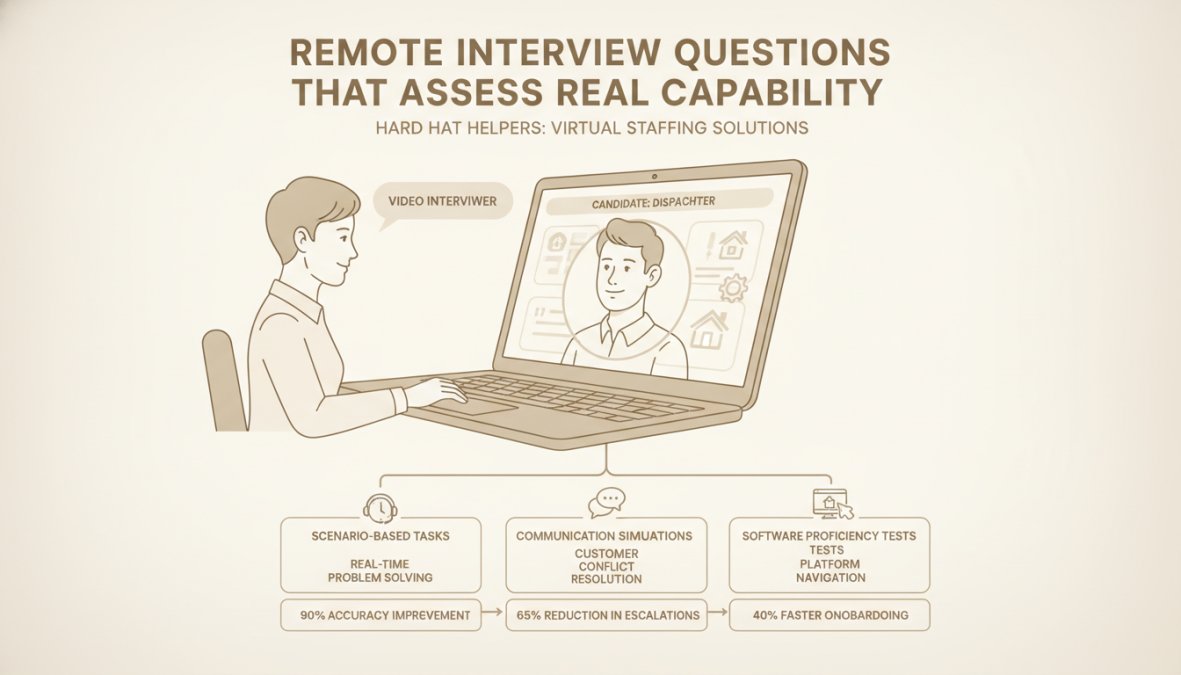
Evaluate self-motivation and independence. Ask: "Describe a project where you worked with minimal supervision. How did you stay on track?" Listen for whether they checked in proactively or waited to be told what to do. Follow with: "Walk me through how you’d handle a situation where you’re blocked waiting for information from someone else. What’s your process?" Remote staff need to be resourceful.
Ask about their remote experience directly: "Have you worked remotely before? If not, what appeals to you about it? What concerns you?" You’re listening for self-awareness about whether they’ll thrive with that freedom.
Test soft skills and communication in virtual settings. During the video call, pay attention to how they communicate. Do they speak clearly? Can they articulate ideas concisely? These matter more for remote roles than office roles.
Ask them to explain something technical related to your business. Watch how they structure the explanation. Are they clear? Do they ask clarifying questions?
Consider a writing test. Have them write a brief email response to a customer question or internal request. Remote staff need to communicate clearly in writing. Ask: "Tell me about a time you had to communicate bad news to someone. How did you handle it?" Remote communication is harder without tone and body language.
Don’t hire someone remote just because they seem nice in an interview. Remote work exposes weaknesses in communication and independence that a friendly personality can mask in an office setting.
Best Platforms to Hire Remote Workers Efficiently
Where you post your job matters for remote hiring. General job boards (LinkedIn, Indeed) work but attract people whose primary motivation is "work from home" rather than "I’m good at remote work." Specialized remote job boards like FlexJobs, We Work Remotely, and Remote.co attract candidates who’ve chosen remote work intentionally and have experience doing it well.
Your job posting should explicitly state "remote" in the title and first line. When screening resumes, look for remote experience and evidence of written communication.
Use video screening before phone interviews. A quick 5-minute async video where candidates answer one question saves you hours of calls with people who aren’t serious. For the final interview round, consider a working interview. Have them complete a small task related to the actual job. Pay them for the hour. You’ll learn more about how they actually work than from any interview question.
Build Your Remote Onboarding Checklist for Success
Remote onboarding is where most companies fail. They send someone a laptop and assume they’ll figure it out.
Pre-boarding tasks and tech stack preparation. Start onboarding before day one. Two weeks before, send them the equipment they’ll need. Send a welcome email explaining what to expect and who they’ll meet.
Create a written onboarding checklist:
- Equipment shipped and confirmed received
- VPN/security access set up and tested
- Email and communication tools configured
- Initial training videos or documentation reviewed
- First-week meeting schedule sent
- Welcome call with manager scheduled
- Buddy assigned (if applicable)
- Access to internal documentation and knowledge base
- Password manager and security protocols explained
- Time zone and availability confirmed
Make your tech stack simple with clear, documented access to everything. Create a one-page reference guide with login URLs and who to contact if they can’t access something. Remote staff need this documented; tribal knowledge doesn’t work.
First-week integration and acculturation. Schedule a 30-minute call on day one to ensure they’re set up. Have their manager do a deeper onboarding call on day two explaining the actual workflow and communication norms.
Assign them specific real work for the first week, not just training videos. Schedule 15-minute check-ins every other day for the first two weeks to catch problems early. After 30 days, do a formal check-in to identify anyone struggling.
Remote onboarding checklists work best when shared with the new hire. They should see what to expect. Transparency reduces anxiety.
Establish Communication Strategies for Virtual Teams
Remote teams need intentional communication structures. Without them, you get either constant Slack noise or radio silence.
Document your communication norms: which tool is for what, response time expectations, when to escalate, meeting culture, and async-first mindset. Most remote failures come from communication breakdown. Someone misunderstands an instruction and doesn’t ask for clarification. Prevent this by making it easy to ask questions.
Use video selectively. Video meetings are exhausting and should be for complex discussions or situations where tone matters. Quick updates should be Slack or email. Decisions should be documented in writing.
Create a knowledge base or documentation system. Dispatchers should find "How do I handle a customer complaint?" without asking. Estimators should find pricing and policies written down. This scales your communication and reduces repetitive questions.
Create Performance Metrics That Work for Remote Staff
You can’t manage remote staff the way you manage office staff. Stop measuring time at desk. Remote staff should be measured on output: Did they complete the tasks? Did they communicate clearly? Did they solve the problem?
Create clear metrics for each role. For a dispatcher: calls handled per day, average resolution time, customer satisfaction. For an estimator: estimates completed per week, average quote accuracy, close rate. Document these metrics before you hire.
Use a mix of metrics. One metric is dangerous. Combine speed and accuracy together. Check in on metrics monthly. Keep records of their work so you can defend decisions if needed.
The best remote performance metrics are ones the employee can track themselves. If they can see their numbers in real-time, they self-manage toward the goal.
Common Mistakes When Hiring Remote Office Staff
Hiring for office skills instead of remote skills. The person who manages by walking around will struggle remotely. You need someone who communicates proactively in writing.
Skipping the culture fit assessment. Remote work is isolating. You need people comfortable working independently.
Assuming remote work is cheaper. Quality remote staff command competitive salaries. You’re saving on office space, not labor.
Onboarding too fast. A slower, thorough onboarding saves time in the long run.
Not documenting anything. Everything needs to be written down. This takes time upfront but saves enormous time as you scale.
Micromanaging activity instead of managing output. Remote staff need autonomy. If you’re requiring time tracking or screenshot monitoring, you hired the wrong person or don’t trust them.
Forgetting about team culture. Remote teams can feel disconnected. You need intentional culture-building: regular team calls, occasional in-person meetings if possible, and genuine connection.
Hiring the wrong person and hoping they’ll figure it out. Remote work exposes problems fast. Address issues immediately rather than hoping for improvement.
Remote office staff can transform your home services business if you hire thoughtfully. The process is different from office hiring, your interview questions change, your onboarding needs documentation, your management approach shifts from activity to output. Hard Hat Helpers specializes in placing pre-qualified remote professionals in home services companies, handling recruitment, training, payroll, and performance monitoring. Our staff are trained specifically for roles like dispatchers, estimators, and office managers in your industry. Book a consultation to see how remote staffing can scale your business without scaling your overhead.
Frequently Asked Questions
What are the most important tips for hiring remote office staff?
The most critical tips for hiring remote office staff include clearly defining remote work expectations upfront, assessing self-motivation and asynchronous communication skills during interviews, using specialized hiring platforms designed for distributed workforces, and implementing a comprehensive remote onboarding checklist. Additionally, establish clear performance metrics based on outcomes rather than activity, ensure your tech stack supports virtual collaboration, and prioritize candidates who demonstrate strong communication skills and independence. For home services industries specifically, pre-qualified talent already trained in your products and services can significantly reduce onboarding time.
How do you conduct effective remote interview questions with candidates?
Effective remote interview questions should focus on soft skills and remote-specific competencies. Ask candidates about their experience with asynchronous communication, how they stay self-motivated without office presence, and how they handle time zone differences. Use scenario-based questions like 'How would you solve a problem if your team wasn't available for 8 hours?' Assess their communication clarity through video conferencing, observe their technical comfort level, and ask for examples of past remote work success. Evaluate psychological safety signals, candidates who ask thoughtful questions and admit knowledge gaps are often better remote workers than those who project false confidence.
What should a remote onboarding checklist include?
A comprehensive remote onboarding checklist should cover pre-boarding tasks like sending welcome packages and tech setup guides, first-week synchronous check-ins to build rapport, access provisioning for all required tools and systems, and company culture acculturation activities adapted for virtual teams. Include training on your specific products and services, clear documentation of workflows and processes, assignment of a dedicated point person for questions, and structured check-ins at days 1, 3, 7, 14, and 30. For home services staff like dispatchers or estimators, ensure training includes your specific operational procedures, customer communication standards, and any industry-specific compliance requirements.
What are the best platforms to hire remote workers?
The best platforms to hire remote workers depend on your industry and role specificity. General platforms like LinkedIn and Indeed offer broad talent pools, while specialized platforms cater to specific needs, particularly for home services industries where pre-qualified, pre-trained talent reduces your hiring burden significantly. When evaluating platforms, consider whether they offer candidate screening, background checks, and skills assessments built-in. Look for platforms that provide ongoing performance monitoring and support, especially if managing payroll and benefits adds administrative complexity. For home services businesses, specialized staffing solutions that handle onboarding, payroll, and compliance can eliminate 50%+ of overhead costs while ensuring seamless integration into existing operations.