

Table of Contents
- What Is a Virtual Estimator for Home Service and How Does It Work?
- Virtual Estimate Software for Contractors: Top Tools Compared
- How to Do a Virtual Estimate for Plumbing (Step-by-Step)
- Virtual Estimating Script for Customers: What to Say and When
- Best Practices for Virtual Home Service Quotes That Win Jobs
- How a Virtual Estimator for Home Service Improves Lead Conversion
- Conclusion
Last Updated: June 10, 2026
A virtual estimator for home service is reshaping how contractors win jobs before ever setting foot on a property. At Hard Hat Helpers, we work with home service businesses across HVAC, plumbing, roofing, and landscaping, and the pattern is clear: contractors who respond to leads with same-day digital quotes consistently outperform those who wait to schedule an in-person visit. Below, we’ll show you exactly how virtual estimation works, which tools support it, and how to set it up without creating liability headaches.
The core argument running through this guide: virtual estimation isn’t just a convenience feature. It’s a lead conversion tool. Treat it like one.
What Is a Virtual Estimator for Home Service and How Does It Work?
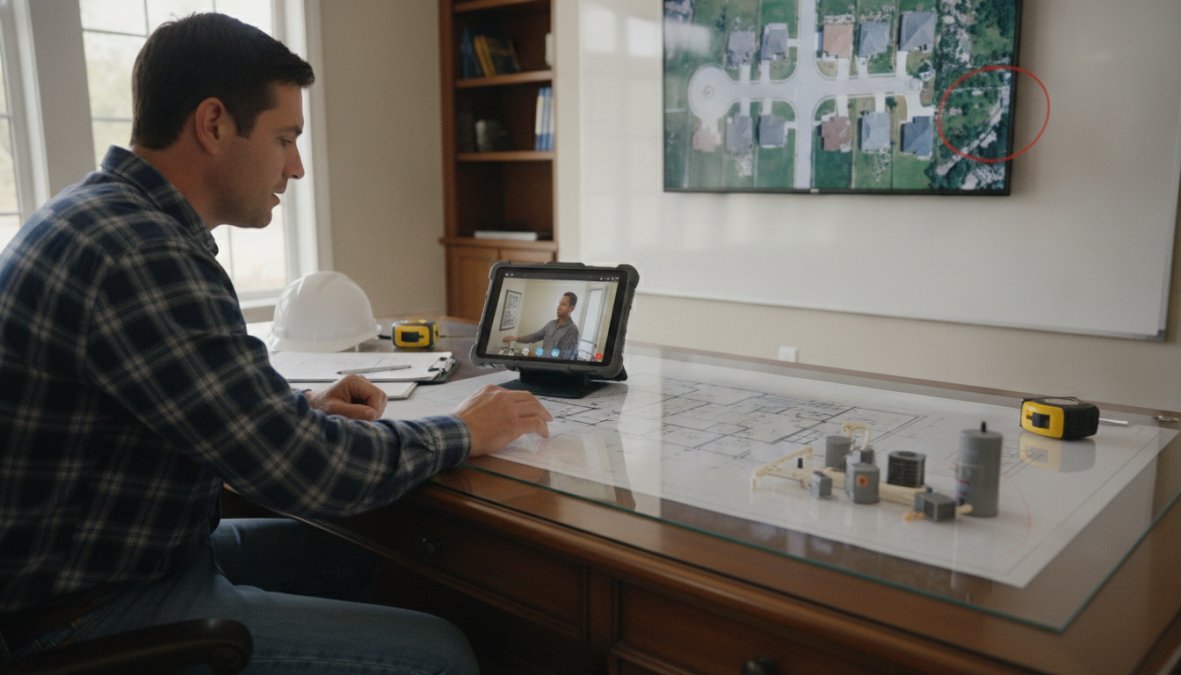
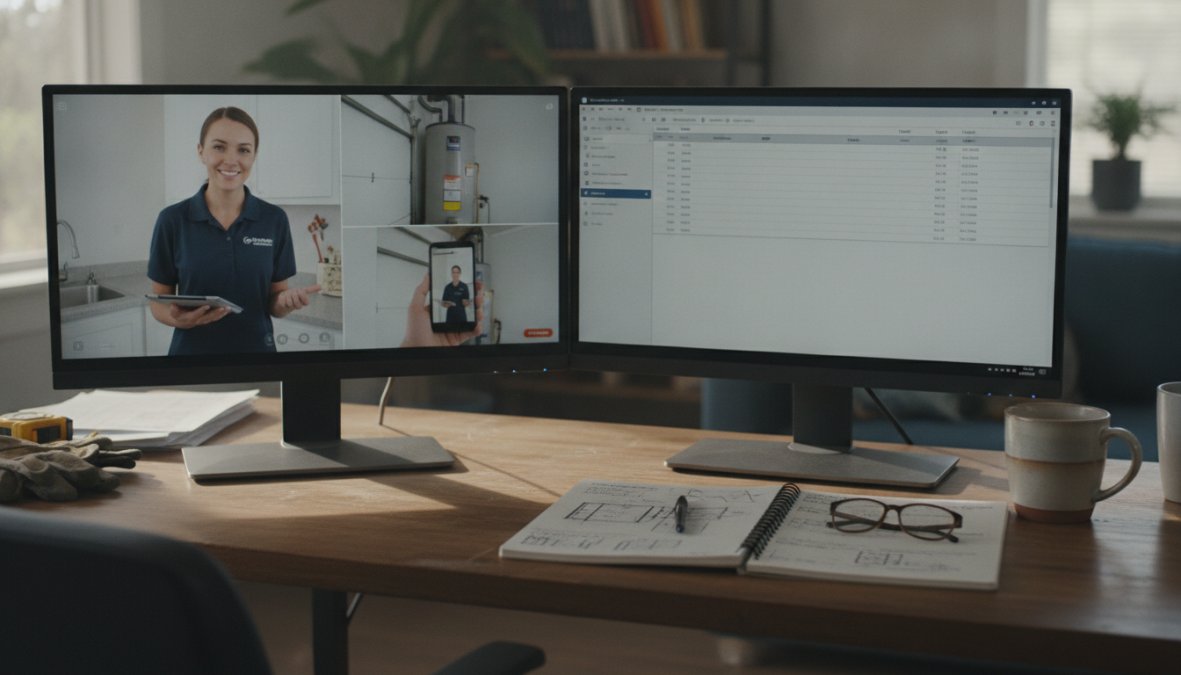
A virtual estimator for home service is a trained professional or software system that generates accurate cost estimates and material takeoffs for residential projects using remotely submitted photos, measurements, and job descriptions, without requiring an in-person site visit.
This is different from a rough ballpark quote given over the phone. A proper virtual estimate draws on quantity takeoffs, labor calculations, and material databases to produce a document a contractor can actually bid from. Customers increasingly expect upfront pricing before they’ll commit to a consultation.
The Remote Inspection Workflow: From Photo to Digital Quote
The standard workflow follows five steps:
- Customer submits photos and details – The homeowner uploads photos, measurements, and a scope description via mobile app or web form. Tools like Hover can generate 3D exterior measurements directly from smartphone photos.
- Estimator reviews and qualifies the scope – A trained estimator reviews submissions for completeness and flags ambiguities before pricing begins.
- Takeoffs and material calculations are performed – Software handles quantity takeoffs and auto-calculates materials. Aerial measurement integrations like MetroMap reduce manual calculation errors on complex projects.
- Labor and overhead are applied – The estimator applies trade-specific labor rates and overhead multipliers to arrive at a project cost.
- Digital quote is delivered – The customer receives a professional proposal, often within hours, via email or client portal.
The whole process can run in under 24 hours for standard residential jobs.
What Trade Types Benefit Most (HVAC, Plumbing, Roofing, Landscaping)
- Roofing and cladding: The highest ROI. Aerial measurement tools calculate roof pitch, surface area, and material quantities from photos alone with strong accuracy.
- Landscaping: Works well for layout-based quotes where site photos and property dimensions are sufficient.
- HVAC: Useful for replacement and service quotes where equipment specs are known. New installations requiring load calculations still benefit from field verification.
- Plumbing: Effective for fixture replacements and visible repair work. Concealed pipe work is harder to quote remotely without additional documentation.
The common mistake is forcing virtual estimation onto every job type. Use it where photo evidence reliably captures the scope.
For roofing and exterior trades, pair your virtual estimation workflow with aerial measurement tools. They eliminate the single biggest source of material takeoff errors: manual roof measurement from the ground.
Virtual Estimate Software for Contractors: Top Tools Compared
The software landscape splits into two categories: purpose-built takeoff platforms and all-in-one field service management tools with estimating modules. The right choice depends on your trade, team size, and whether estimation needs to connect directly to scheduling and dispatch.
| Tool | Starting Price | Best For | Key Strength |
|---|---|---|---|
| Hard Hat Helpers | Contact for pricing | Full managed virtual estimating | Pre-trained home service staff |
| Virtual Estimator | Contact for pricing | Roofing, cladding, landscaping | Aerial measurement + 3D models |
| QuoteIQ | $29.99/month | Field service contractors | Mobile-first, AI renderings |
| PlanSwift | $1,749/year | Blueprint-based takeoffs | Industry-standard accuracy |
| Housecall Pro | Contact for pricing | HVAC, plumbing, electrical | Estimate-to-schedule integration |
| Clear Estimates | $79/month | Remodelers | 15,000+ pre-loaded line items |
| Buildxact | Contact for pricing | Custom home builders | AI-assisted digital takeoff |
| Hover | Contact for pricing | Exterior contractors | 3D model from phone photos |
| Joist | $8/month | Solo contractors | Simplicity and low cost |
| STACK | ~$2,999/user/year | Commercial/larger firms | Real-time team collaboration |
According to construction technology adoption research from JBKnowledge, digital takeoff tools are now among the most widely adopted technology investments in the construction sector, with adoption accelerating significantly in the residential trades.
DIY Software vs. Managed Virtual Estimating Services
DIY software like PlanSwift or Clear Estimates puts estimation capability directly in your hands, but setup takes time, learning curves are steep, and someone on your team has to run the tool consistently. For contractors with high bid volume and a dedicated in-house estimator, this makes sense. For everyone else, it becomes a recurring bottleneck.
Managed virtual estimating services, like the staffing model Hard Hat Helpers operates, assign you a pre-trained estimator who works within your existing systems, handling takeoffs, quantity calculations, and digital quote delivery. Hard Hat Helpers trains its virtual staff on your products, services, and pricing so estimates reflect your actual cost structure, not a generic template.
The honest comparison: DIY software is cheaper per seat but requires consistent internal capacity. Managed services cost more per month but eliminate the execution gap.
Choosing DIY estimating software without assigning a dedicated internal owner almost always results in inconsistent bid quality. Assign one person to own the tool, or outsource the function entirely. Partial adoption is worse than either extreme.
How to Do a Virtual Estimate for Plumbing (Step-by-Step)
Plumbing is one of the trickier trades for virtual estimation because so much of the work is concealed. The approach below works for genuinely viable remote job types: fixture replacements, water heater swaps, visible leak repairs, and bathroom remodels where the customer has renovation plans.
Total Time: 45-90 minutes per estimate
What You’ll Need: Customer photo submission form, estimating software or line-item database, labor rate sheet, proposal template
Step 1: Define the acceptable scope types [Time: 5 minutes]
Decide upfront which plumbing jobs you’ll quote virtually and document this as a checklist. Jobs with concealed rough-in work or unknown pipe conditions should require field verification before a firm quote is issued.
Step 2: Send a structured photo request to the customer [Time: 2 minutes]
Request photos of the existing fixture from multiple angles, the shut-off valve location, the water heater model tag if relevant, and any visible damage. Vague photo submissions are the number one cause of inaccurate virtual plumbing quotes.
Step 3: Review photos and identify scope [Time: 10-15 minutes]
Confirm the job fits within remotely-quotable scope. If photos are insufficient, send a follow-up request before proceeding.
Step 4: Pull line items and apply labor [Time: 20-30 minutes]
Select materials, apply quantities, and attach standard labor rates. Clear Estimates’ library of pre-loaded line items works well for residential plumbing work.
Step 5: Apply contingency and markup [Time: 5 minutes]
Add a contingency allowance for concealed conditions and state this clearly in the quote language. This is your primary protection against scope creep.
Step 6: Deliver the digital quote with scope exclusions stated [Time: 5 minutes]
Send the proposal with explicit language about what the quote covers and what it doesn’t. Customers appreciate the clarity, and it protects you legally.
Expected Result: A professional digital quote delivered within 24 hours that the customer can review, approve, or request changes on.
Virtual Estimating Script for Customers: What to Say and When
Most contractors underestimate how much the customer conversation around virtual estimates matters. A confused customer who doesn’t understand why you’re asking for photos will either drop the inquiry or accept the quote with low confidence.
Initial inquiry response (phone or text):
"Thanks for reaching out. We offer free virtual estimates for [job type] so you can get accurate pricing without waiting for an appointment. I’ll send you a quick photo guide, and we can usually have your quote back within [turnaround time]. Does that work for you?"
Photo request follow-up:
"To prepare your estimate, we need a few photos of [specific areas]. I’ve sent a short guide to your email showing exactly what to capture. The more detail you can provide, the more accurate your quote will be."
Quote delivery:
"Your estimate is attached. It covers [specific scope] and excludes [specific exclusions]. If you have questions or want to adjust the scope, just reply and we can update it. We’re ready to schedule as soon as you’re ready to move forward."
Customers who understand why virtual estimation works for their job type convert at significantly higher rates than those who feel like they’re getting a second-tier experience.
Frame virtual estimation as a speed advantage for the customer, not a cost-saving measure for your business. “Get your quote today without waiting for an appointment” converts better than any technical explanation of the process.
Best Practices for Virtual Home Service Quotes That Win Jobs
The best practices come down to three things: accuracy, presentation, and speed.
On accuracy: the biggest driver of inaccurate virtual quotes is insufficient customer-submitted information. Solve this upstream with a structured intake process, not downstream by padding estimates. On presentation: tools like QuoteIQ generate AI-powered before-and-after renderings from job photos, giving customers a visual stake in the outcome before they read a single line item. On speed: according to research on lead response rates from Harvard Business Review, the probability of qualifying a lead drops sharply after the first hour of contact. A quote delivered within hours beats one delivered in three days, regardless of price.
Accuracy, Liability, and Scope Creep: Setting Clear Expectations
Scope creep is the hidden cost of virtual estimation most guides skip over. A virtual quote is based on limited information, and conditions discovered during field execution can change the scope, contractors who don’t address this upfront end up absorbing the cost or fighting over change orders.
The fix is straightforward: every virtual quote must include explicit scope inclusions, explicit scope exclusions, and a stated contingency clause. Language like "this estimate covers visible fixture replacement and does not account for concealed pipe damage or non-standard rough-in configurations" protects both parties. Many contractors also offer a paid field verification step for complex jobs, converting the virtual quote into a pre-construction assessment, a more defensible position if scope changes arise.
Data Privacy and the Legal Validity of Virtual Quotes
Customers submitting home photos deserve a clear statement about how images are stored, who has access, and how long they’re retained, especially when using third-party tools like Hover or Buildxact where photos are processed on external servers. A brief privacy notice in your quote request form builds trust and reduces friction.
On legal validity: a virtual quote is a contract offer in most jurisdictions once the customer accepts it in writing. As documented in contract law guidance from the American Bar Association, digital acceptances are legally binding under the Electronic Signatures in Global and National Commerce Act. This means your scope exclusions and contingency language carry real legal weight. Treat your virtual quote template as a legal document and have a contractor-focused attorney review your standard language once, a one-time cost that protects every estimate you send afterward.
How a Virtual Estimator for Home Service Improves Lead Conversion
Speed is the primary mechanism. A virtual estimator removes the scheduling bottleneck that kills most leads.
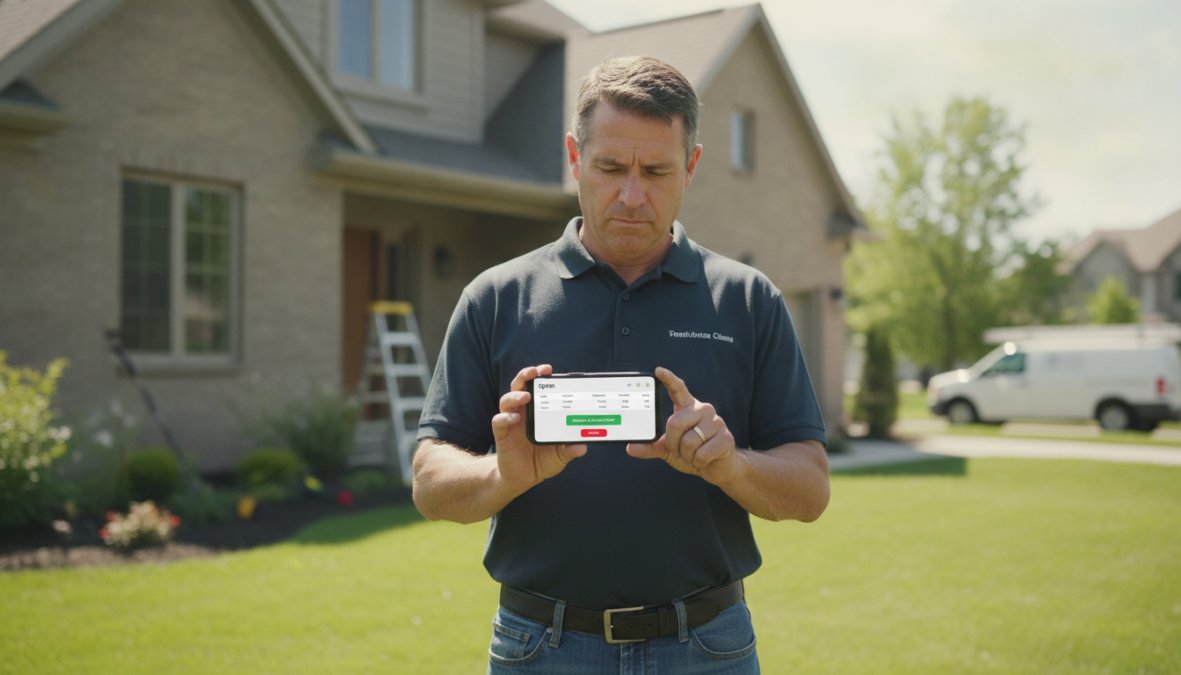
Without virtual estimation, the typical lead flow looks like this: customer inquires, contractor schedules a site visit (often 3-7 days out), estimate is prepared after the visit, quote arrives days later, by which point many customers have already hired someone else. With virtual estimation, the same flow compresses to: customer inquires, submits photos, receives a digital quote within 24 hours, while their decision window is still open.
Beyond speed, virtual estimation enables pricing transparency earlier in the sales process. Customers who receive upfront pricing before committing to a consultation show up with higher purchase intent, and tools like Housecall Pro’s automated follow-up sequences keep those leads warm if they don’t accept immediately. The pipeline effect compounds over time: more quotes in circulation means more jobs closed, even if the individual conversion rate stays flat.
Hard Hat Helpers supports this model directly by providing pre-qualified virtual estimators trained specifically for home service trades. Their staff integrates into your existing CRM and field service management software, handling the estimation workload so your field team stays focused on execution, with 24/7 availability and a dedicated Client Success Manager overseeing performance.
As noted in field service management industry analysis from ServiceMax, contractors who reduce quote turnaround time consistently report improvements in both lead-to-appointment conversion and overall project pipeline volume.
The challenge most home service contractors face isn’t a lack of leads. It’s a slow, manual estimation process that lets good leads go cold before a quote ever lands in the customer’s inbox. Hard Hat Helpers solves this directly: pre-trained virtual estimators who integrate into your existing workflow, manage their own onboarding and payroll through Hard Hat Helpers, and deliver digital quotes with the speed and accuracy your sales process needs. Book a consultation with Hard Hat Helpers to see how a dedicated virtual estimator can reduce your overhead and build a faster, more consistent project pipeline.
Frequently Asked Questions
What is a virtual estimator for home services?
A virtual estimator for home services is a trained professional or software system that generates cost estimates, material takeoffs, and digital quotes without an in-person site visit. Using customer-submitted photos, video walkthroughs, and aerial measurement tools, virtual estimators can deliver accurate upfront pricing for trades like HVAC, plumbing, roofing, and landscaping, reducing turnaround time and improving the overall customer experience before a technician ever steps on-site.
Are virtual estimates as accurate as in-person estimates?
Virtual estimates can be highly accurate for well-defined scopes of work when customers provide quality photos or video and when the estimator uses purpose-built virtual estimate software for contractors. Accuracy depends on the trade: exterior projects like roofing and cladding lend themselves well to remote measurement tools, while complex interior work such as plumbing rough-ins may require follow-up on-site verification. Setting clear scope boundaries in your quote helps manage liability and prevents scope creep.
How do I convince customers to accept a virtual estimate?
Use a structured virtual estimating script for customers that emphasizes convenience, speed, and pricing transparency. Explain the process upfront: what photos or video they need to provide, how quickly they will receive their digital quote, and what happens at the in-person appointment. Framing the virtual estimate as a free, no-obligation service that saves them time dramatically reduces resistance. Offering a clear 'Request a Change' workflow also builds trust by showing flexibility.
What tools or software are needed to run virtual home service estimates?
The right tool depends on your trade and business size. Options range from mobile-first apps like QuoteIQ (starting at $29.99/month) and Joist (from $8/month) for smaller contractors, to robust takeoff platforms like PlanSwift ($1,749/year) and STACK for teams needing quantity takeoffs and BIM-compatible workflows. Platforms like Housecall Pro add SaaS integration with scheduling and dispatching. Alternatively, managed virtual staffing solutions like Hard Hat Helpers provide pre-trained estimators who work inside your existing tools.
What are the data privacy risks of sending home photos for a virtual estimate?
When homeowners submit photos or video for a virtual estimate, those files may contain metadata including GPS coordinates and device information. Home service providers should use secure, encrypted upload portals rather than personal email or messaging apps. Clearly state in your quote request form how photos are stored, who can access them, and when they are deleted. Transparent data handling policies improve customer trust and reduce liability, particularly as consumer privacy regulations continue to expand.