




Last Updated: October 29, 2026
Quick Summary
A plumbing dispatcher keeps the service calendar moving by answering calls, booking appointments, assigning technicians and keeping customers informed. A remote plumbing dispatcher does this work from a home office, using a laptop, headset and scheduling software. The role suits people with strong phone manners, comfort with scheduling tools and steady judgment under pressure.
- Dispatchers answer inbound calls, book appointments and match each job to a technician.
- Leave buffer time between jobs to avoid overbooking, the most common scheduling mistake.
- Employers look for phone skills, software comfort and accurate data entry.
- A reliable internet connection, quiet workspace and headset are typical remote requirements.
- Track booking rate, on-time arrival rate and first-time appointment accuracy weekly.
Table of Contents
- Plumbing Dispatcher Duties and Responsibilities
- Plumbing Dispatcher Skills and Qualifications That Matter
- Plumbing Dispatch Software and Remote Setup Requirements
- Plumbing Dispatcher Job Description Template
- How Employers Measure Dispatcher Performance
- Booking Your Next Dispatch Hire With Hard Hat Helpers
- Frequently Asked Questions
A plumbing dispatcher is the person who keeps the service calendar moving.
Most days follow a rhythm. The first hour usually goes to checking the schedule, confirming the day’s appointments and reviewing any overnight messages.
Then the calls start:
- Answer inbound calls and log new service requests
- Book appointments in the scheduling system
- Match each job to the right technician based on skill and location
- Send arrival windows and updates to customers
Here is where the work gets interesting. Schedules rarely hold for a full day.
Watch out: Overbooking a technician is the most common scheduling mistake.
Plumbing Dispatcher Duties and Responsibilities
The core duties of a plumbing dispatcher center on coordination. The role connects three groups at once: the customer, the technician and the office.
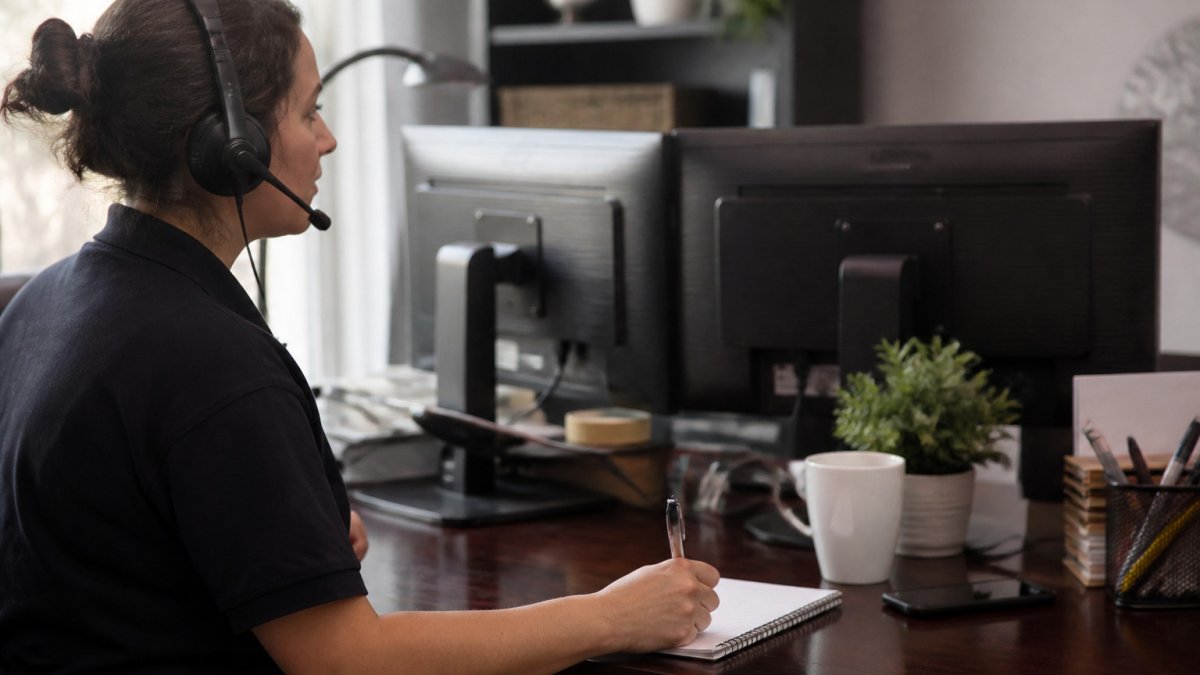
On the customer side, the dispatcher is often the first and only voice they hear.
Office duties include tracking open jobs, confirming completed work and flagging anything that needs a manager’s attention. Many dispatchers also handle basic follow-up calls after a job closes.
A useful way to think about the job is to list what success looks like each week:
- Appointments booked with few gaps in the schedule
- Customers notified before a technician is late
- Technicians sent to jobs that match their skills
- Open items closed out before the next billing cycle
Plumbing Dispatcher Skills and Qualifications That Matter
Employers usually look for a mix of phone skills, software comfort and steady judgment under pressure.
Core skills to look for include:
- Clear phone manners and an even tone when callers are upset
- Comfort with scheduling and field-service software
- Fast typing and accurate data entry
- Basic plumbing terminology, such as water heater, shutoff valve or drain line
Qualifications vary by employer. A high school diploma is common. Some companies prefer prior dispatch or customer service experience. Remote roles also tend to ask for a reliable internet connection, a quiet workspace and a computer that meets the software’s requirements.
A common mistake is hiring for speed alone. The fastest dispatcher is not always the best one.
Plumbing Dispatch Software and Remote Setup Requirements
Remote dispatching lives or dies on the tool stack.
The four layers of a dispatch stack:
- Field-service management (FSM) platform, the system of record. It holds the service calendar, customer records, job history, technician assignments, and often invoicing. Common platforms in home services include several field-service tools. Each has a different board layout, so platform-specific experience can be valuable.
- Phone system, usually a cloud-based VoIP service. Dispatchers need to transfer calls, place callers on hold, and log call outcomes against the customer record. Call recording and voicemail-to-text are standard features employers expect dispatchers to use.
- Technician communication, the FSM mobile app is the primary channel, but many shops also run a group text or a messaging tool for real-time updates. Dispatchers must know which channel a technician actually checks, because a job note sent to the wrong place is a job note nobody reads.
- Customer notifications, automated arrival-window texts and emails, often triggered from the FSM. The dispatcher’s job is to verify the automation fired and to call manually when it did not.
Remote setup requirements employers commonly specify:
- A dedicated, quiet room with a door that closes, background noise on a customer call is a firing offense in most shops
- Wired ethernet preferred, or a stable connection of at least 25 Mbps down and 10 Mbps up; VoIP calls degrade badly on weak Wi-Fi
- A USB headset with noise cancellation, laptop speakers and built-in mics pick up room echo
- A computer that meets the FSM’s browser requirements; most platforms are cloud-based and run in Chrome or Edge, but older machines choke when several tabs and a phone app are open
Security and privacy basics. Dispatchers handle customer names, addresses and phone numbers, so employers often set security requirements for their accounts.
Time-zone coverage. A remote dispatcher is often hired specifically to cover hours the shop cannot staff in-house, early mornings on the East Coast, evenings on the West Coast, or weekend overflow.
Before an interview, ask which FSM platform the shop runs and whether they will give you a sandbox login. A 30-minute walkthrough of the actual board teaches more than a week of generic scheduling tutorials, and most platforms publish free training videos.
Experience with one FSM transfers well to another because the underlying logic, calendar, job status, technician assignment, customer record, is the same. Our guide to remote plumbing software covers eight tools for managing jobs off-site. What does not transfer is muscle memory for a specific board, so be honest in an interview about which platforms you have actually used.
Plumbing Dispatcher Job Description Template
Employers who are writing a posting for this role can start with a structure like the one below. Adjust the details to match your shop.
Job Title: Remote Plumbing Dispatcher
Schedule: Full-time, weekday hours, with occasional weekend coverage
Location: Remote, from a home office with reliable internetSummary: We are looking for a dispatcher to schedule service calls, assign technicians and keep customers informed from a home office.
Responsibilities:
- Answer inbound calls and book service appointments
- Assign technicians based on skill, location and availability
- Communicate arrival windows and schedule changes to customers
- Coordinate with field technicians throughout the day
- Track open jobs and close out completed work
Qualifications:
- Customer service or dispatch experience preferred
- Comfort with scheduling software
- Strong phone and written communication
- Basic knowledge of plumbing or home service terms
Equipment Required: Computer, headset, dual monitors preferred, stable internet connection
Include the exact keyword phrase in the posting title and the first paragraph. Candidates search for it, and it helps the listing reach the right people.
How Employers Measure Dispatcher Performance
A remote dispatcher is easy to micromanage and hard to manage well. The fix is a small set of measures that reflect real dispatch work, reviewed on a weekly cadence rather than watched minute by minute. Most shops that get this right track five to seven numbers and ignore the rest.
Core dispatch KPIs, defined:
- Booking rate, booked appointments divided by qualified inbound calls. It measures whether the dispatcher converts callers into scheduled work rather than letting them hang up to “call around.” A low rate usually points to weak phone handling or a schedule that looks full when it is not.
- Schedule utilization, booked technician hours divided by available technician hours. The target is high but not 100%; a board packed to the edges has no room for the job that runs long, and one overrun cascades into every later arrival window.
- First-time appointment accuracy, the share of jobs where the assigned technician had the right skill and parts for the call. A wrong assignment costs a second trip, a second arrival window, and often a second customer conversation.
- On-time arrival rate, the share of jobs where the technician arrived inside the promised window. Dispatchers influence this directly through buffer time and proactive reschedules.
How to review them without micromanaging:
- Review weekly, not daily. Daily numbers swing with weather, season, and a single emergency call, so a weekly view shows trend rather than noise.
- Pair every efficiency metric with a quality metric. Booking rate alone rewards pressure; pair it with first-time appointment accuracy and customer satisfaction so speed does not crowd out judgment.
- Share the numbers with the dispatcher. A remote worker who cannot see their own dashboard cannot improve against it, and most FSM platforms can expose a read-only view.
- Set the target in writing at the start, along with how feedback will be delivered. A short weekly check-in beats a monthly surprise.
Do not measure keystrokes, screen time, or call volume as primary KPIs. They reward activity over outcomes and are the fastest way to lose a good remote dispatcher to a shop that trusts them.
A simple weekly scorecard an employer can build in a spreadsheet or pull from the FSM: booking rate, schedule utilization, first-time appointment accuracy, on-time arrival rate, notification compliance, and reschedule recovery time, one row per week, one column per metric. Six numbers, reviewed in fifteen minutes, tell you more about a dispatcher’s performance than any activity monitor.
The table below summarises the core dispatch measures employers track, as the section describes them.
| Measure | What it tracks | Why it matters |
|---|---|---|
| Booking rate | Booked appointments ÷ qualified inbound calls | Shows whether callers become scheduled work |
| Schedule utilization | Booked technician hours ÷ available hours | A board packed to the edges leaves no room for overruns |
| First-time appointment accuracy | Jobs with the right skill and parts | Wrong assignments cost a second trip |
| On-time arrival rate | Jobs arrived inside the promised window | Dispatchers influence this through buffer time |
| Customer notification compliance | Customers told an arrival window before dispatch | Prevents ‘where is my plumber’ calls |
| Average call handling time | Total talk time ÷ calls handled | A guardrail, not a target |
| Reschedule recovery time | Time to rebook a cancelled or moved job | Fast recovery protects revenue |
Booking Your Next Dispatch Hire With Hard Hat Helpers
If you have read this far and you run a plumbing, HVAC or other home service business, a remote dispatcher may be the next hire that frees up your time. Hard Hat Helpers provides virtual staff trained for the home services industry, including dispatchers. We handle onboarding, payroll and benefits, and every client gets a dedicated Client Success Manager. Our team provides tailored training on your specific products, services and tools.
Pricing depends on the role, hours and level of coverage you need, so we recommend booking a conversation to get an accurate picture. To see how this would work for your shop, book a consultation with Hard Hat Helpers or review the remote dispatcher hiring options and tools we offer. If you want to understand the costs and duties in more detail, our guide to hiring a dedicated virtual dispatcher walks through the decision. When you are ready to manage the role well, our guide to managing remote dispatchers covers communication and performance.
Frequently Asked Questions
What does a remote plumbing dispatcher do?
A remote plumbing dispatcher takes inbound service calls, books appointments, assigns technicians based on availability, skill and location, and keeps customers informed about arrival times. Most of this happens through dispatch software, phone and text, so the work is done from a home office with a reliable internet connection. Good dispatchers also handle schedule changes when a job runs long or an emergency comes in, and they communicate those changes clearly to both the field team and the customer.
Can a plumbing dispatcher work remotely?
Yes. Many plumbing companies and outsourced dispatch providers hire remote dispatchers because the core work of taking calls, scheduling and messaging happens in software and on the phone. Employers typically require a quiet workspace, a wired or stable high-speed internet connection, a headset, and a computer that can run the company’s dispatch platform. Some companies also require set weekday or after-hours coverage, so confirm the schedule expectations before accepting an offer.
What skills does a plumbing dispatcher need?
Strong written and phone communication, comfort with scheduling software, and the ability to juggle several open jobs at once are the core skills. Basic familiarity with plumbing terminology helps a dispatcher explain urgency, such as a sewer backup versus a dripping faucet, and route the call correctly. Calm judgment under pressure matters because emergency calls often arrive during peak hours. Employers also look for experience in a customer service or service-industry role.
What should a plumbing dispatcher job description include?
A strong job description lists the job title, employment type, weekly schedule and pay range, followed by a clear summary of duties such as handling inbound calls, scheduling service appointments and dispatching technicians. It should name the required software and devices, the minimum qualifications, and the performance measures used to evaluate success, such as call handling time and on-time arrival rate. Including the expected work setup for remote candidates prevents mismatched applications and saves time for both sides.