


Table of Contents
- Why Pre-Qualified Talent Cuts Overhead Costs
- Top Platforms for Accessing Pre-Qualified and Trained Talent
- Comparison Table: Features, Pricing, and Best Use Cases
- 1. Hard Hat Helpers: Virtual Staff Built for Home Services
- 2. Pin: Data-Driven Talent Sourcing
- 3. Arya Pulse: AI-Powered Candidate Matching
- 4. iCIMS Talent Cloud: Enterprise-Grade Hiring Suite
- 5. LinkedIn Talent Insights: Market Intelligence for Hiring
- 6. Greenhouse: Structured Hiring Workflows
- 7. Workday: Unified HR and Finance Platform
- 8. SmartRecruiters: Collaborative Hiring Success
- 9. Quickly Hire: On-Demand Staffing
- 10. Going PRO Talent Fund: Grant-Based Training Support
- Cost Per Hire Reduction Strategies That Work
- Virtual Assistant Services for Home Services: A Smarter Staffing Model
- Onboarding vs Recruitment Costs: Where Your Budget Actually Goes
- How to Calculate ROI When You Outsource Talent
- Risk Mitigation and Integration for Remote Talent
- Frequently Asked Questions
Last Updated: September 14, 2026
Why Pre-Qualified Talent Cuts Overhead Costs
Pre-qualified talent is a candidate pool already screened, skills-tested, and often trained before you interview them. For home services operators, soft recruiting costs, not salaries, drive most overhead bloat.
A bad hire costs a plumbing or HVAC shop the job posting, resume screening, dead-end interviews, and weeks of ramp-up. A vetted candidate pool skips most of that. When someone arrives trained on dispatch software and service-area logic, operational expenditure drops: less overtime payroll, fewer scheduling errors, and less of your own time managing instead of selling.

Across home services, businesses that move administrative roles to pre-trained remote professionals can achieve lower cost-per-hire and faster time-to-hire than traditional recruitment (The Real Costs of Recruitment).
The cheapest hire is rarely the lowest salary. It is the one who needs the least screening, the shortest ramp-up, and the fewest mistakes in their first 90 days.
Top Platforms for Accessing Pre-Qualified and Trained Talent
The fastest route to a vetted candidate pool is a purpose-built platform, not a general job board. Here are some options worth evaluating, ranked by fit for home services operators cutting overhead.
Comparison Table: Features, Pricing, and Best Use Cases
| Platform | Starting Price | Key Strength | Best For |
|---|---|---|---|
| Hard Hat Helpers | Quote-based | Home services-specific virtual staff | HVAC, plumbing, remodeling shops |
| Pin | $100/month | 850M+ candidate profiles | Data-driven sourcing teams |
| Arya Pulse | $3,600/year | AI candidate matching | Mid-to-large enterprises |
| iCIMS Talent Cloud | $20,000/year | End-to-end hiring suite | Large organizations |
| LinkedIn Talent Insights | $40,000/year | Market intelligence | Strategic HR planning |
| Greenhouse | Custom quote | Structured hiring workflows | Growing companies |
| Workday | Custom quote | Unified HR and finance | Global enterprises |
| SmartRecruiters | Custom quote | Collaborative hiring | Modernizing tech stacks |
| Quickly Hire | Service-based | On-demand staffing | Immediate short-term needs |
| Going PRO Talent Fund | Grant-based | Training subsidies | Offsetting training costs |
1. Hard Hat Helpers: Virtual Staff Built for Home Services
Hard Hat Helpers is a strong fit for home services operators because it does not sell generic virtual assistants. It provides dispatchers, estimators, and office managers who are pre-qualified and trained for the trades, then integrates them into your operations. Managed payroll and benefits remove the administrative burden that eats a small shop’s week.
What sets it apart is tailored training on your products, services, and tools, plus a dedicated Client Success Manager and continuous performance monitoring. The tradeoff: pricing depends on staffing scope, so you need a consultation rather than a public price list. Book a consultation to get a quote.

2. Pin: Data-Driven Talent Sourcing
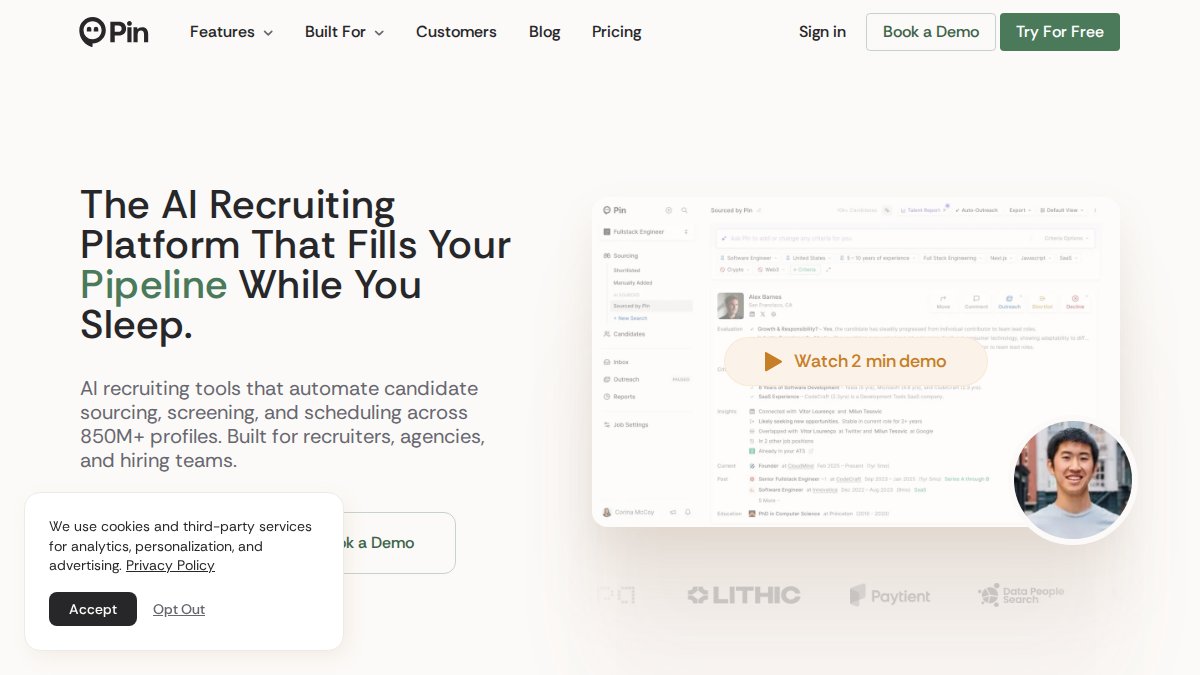
Pin gives recruiters over 850 million multi-source candidate profiles, with a reported 83% candidate acceptance rate. Entry pricing starts at $100/month. The catch: it needs active management to deliver ROI, so it suits teams with a dedicated recruiter, not a busy owner-operator.
3. Arya Pulse: AI-Powered Candidate Matching
Arya Pulse uses AI-driven matching and automated engagement workflows to shorten sourcing time, integrating with existing applicant tracking systems. At $3,600/year it targets mid-to-large enterprises. The annual commitment is the main drawback for a two-truck operation.
4. iCIMS Talent Cloud: Enterprise-Grade Hiring Suite
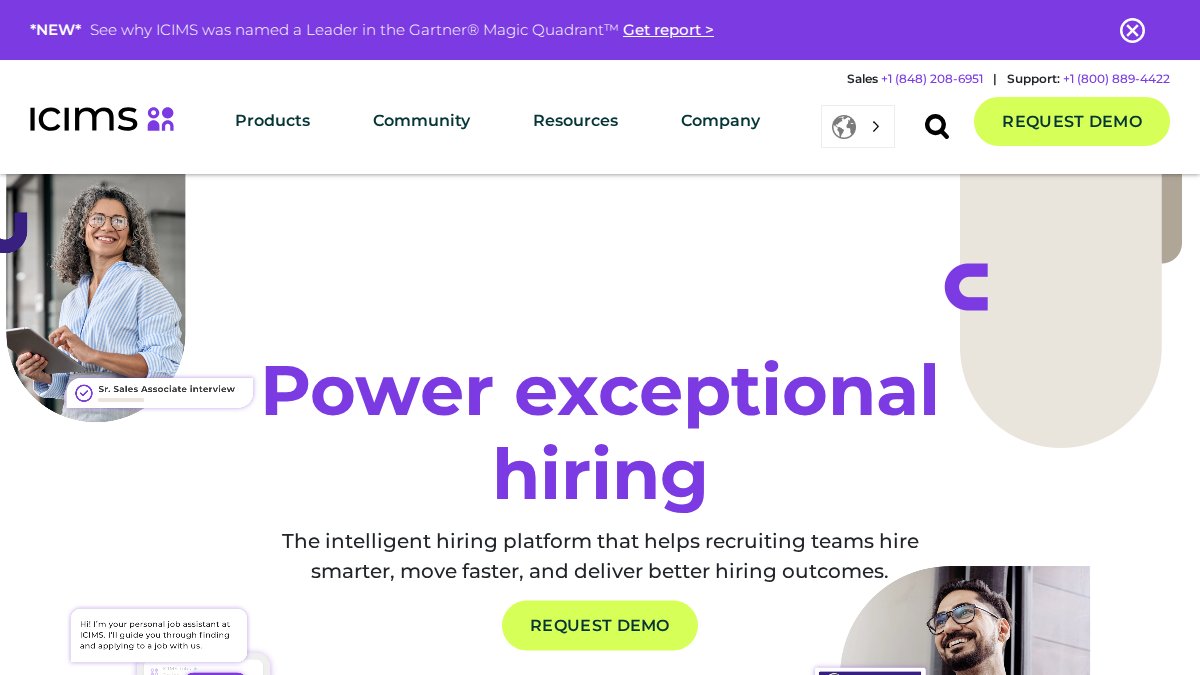
iCIMS manages the full hiring lifecycle with enterprise-grade security and audit trails, starting around $20,000/year. It scales for large teams but is overkill for most home services shops.
5. LinkedIn Talent Insights: Market Intelligence for Hiring
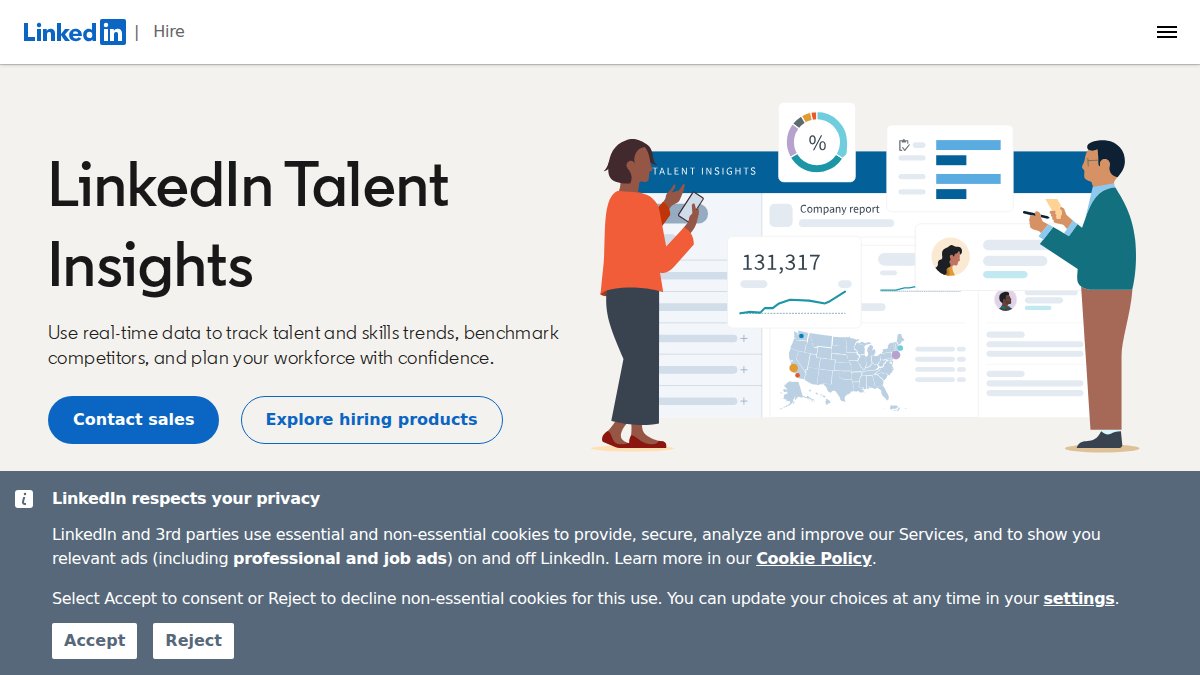
LinkedIn Talent Insights delivers real-time data on talent supply and demand for workforce strategy and benchmarking. At $40,000/year, it is a planning tool for large talent acquisition teams, not a staffing solution.

6. Greenhouse: Structured Hiring Workflows
Greenhouse is a leading applicant tracking system built around structured hiring that reduces bias, with an extensive integration library and strong analytics. Pricing is quote-based, frustrating buyers who want upfront transparency.
7. Workday: Unified HR and Finance Platform
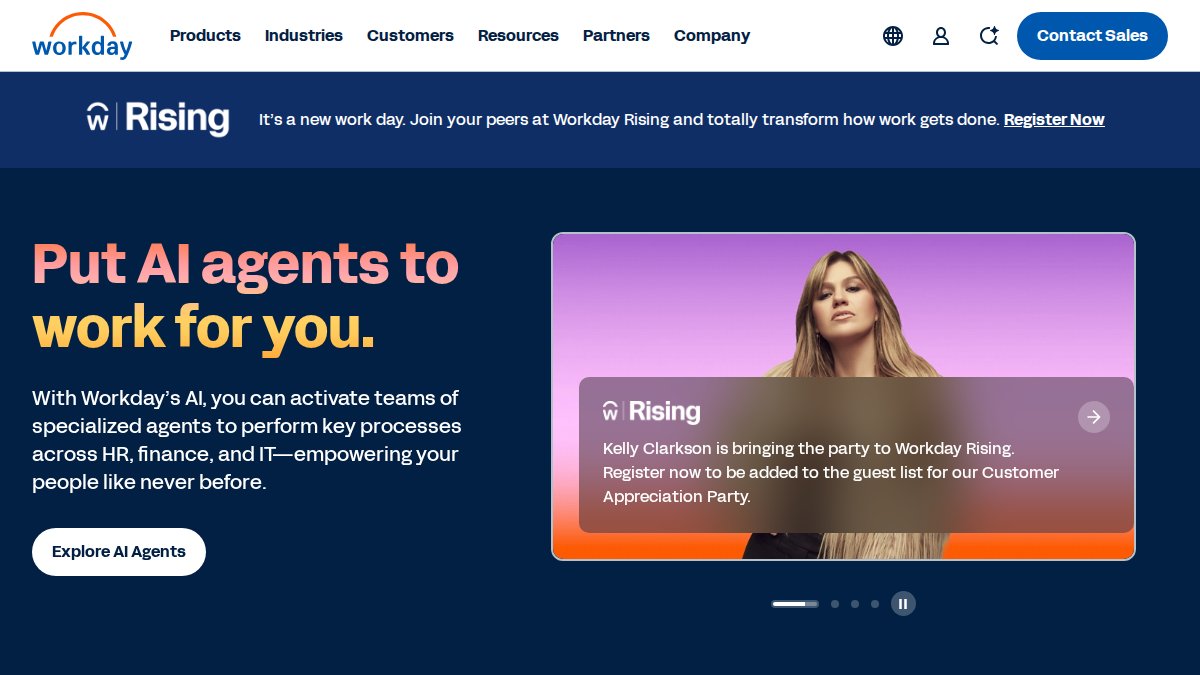
Workday combines HR and finance data with AI-powered talent matching and global compliance reporting. Implementation is complex and pricing custom, making it a fit for enterprises, not small operations. Smaller organizations seeking to avoid such heavy infrastructure often find that evaluating outsourced finance pricing models provides a more scalable path toward managing overhead without sacrificing financial oversight.
8. SmartRecruiters: Collaborative Hiring Success
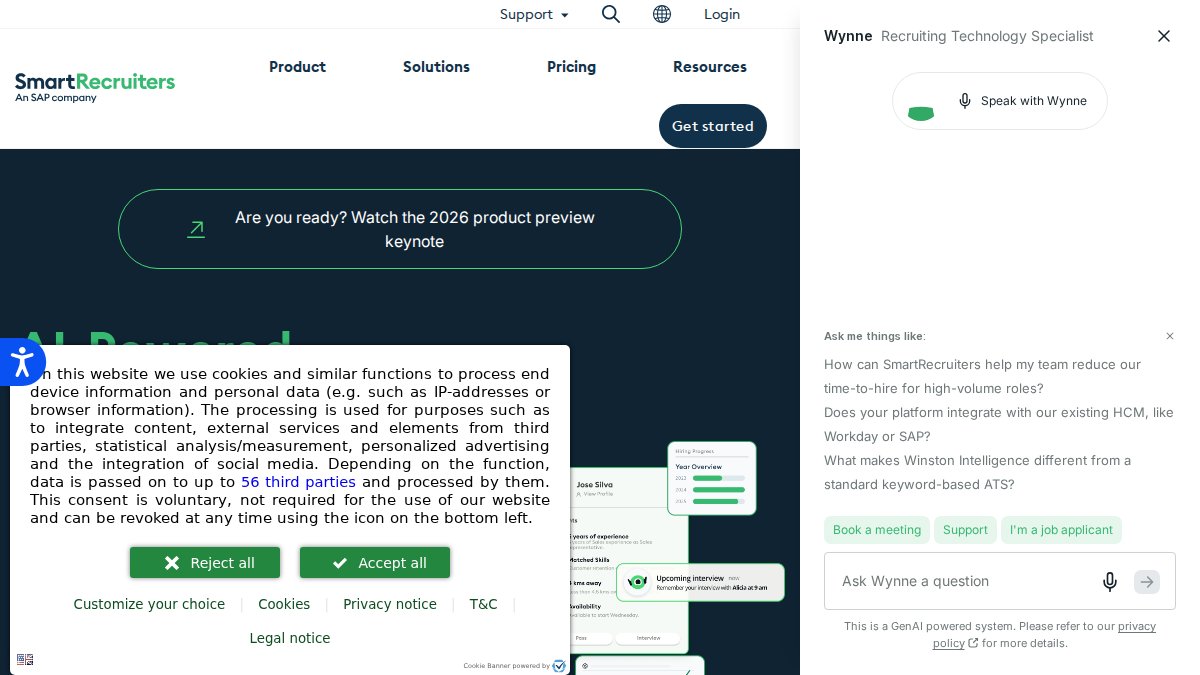
SmartRecruiters centers on collaborative hiring tools and a built-in AI sourcing assistant with a mobile-optimized candidate experience. It requires training to unlock full functionality, but the interface is user-friendly.
9. Quickly Hire: On-Demand Staffing
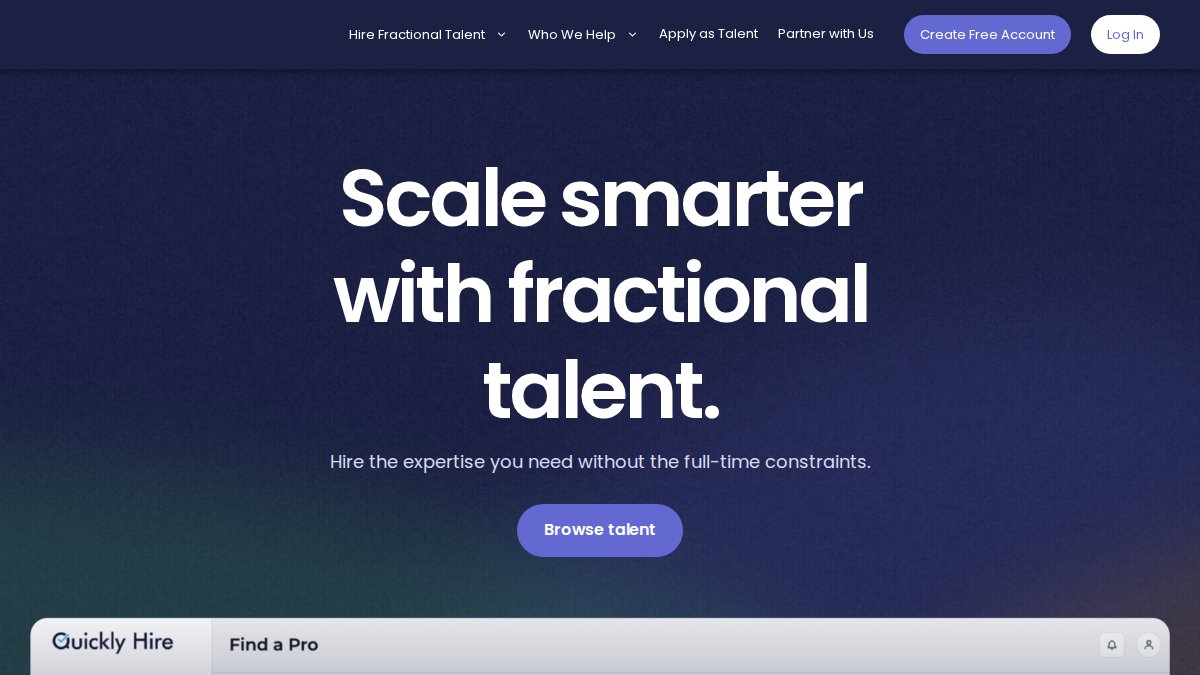
Quickly Hire provides access to a pre-vetted pool on demand, cutting recruitment overhead and shortening time-to-hire. The limitation is retention: you get speed, not necessarily a permanent team member.
10. Going PRO Talent Fund: Grant-Based Training Support
The Going PRO Talent Fund is a state-supported program that awards employers funds to train and retain newly hired employees. It reduces direct training expenses and supports workforce development, but eligibility is restricted to specific state operations, so check the Going PRO Talent Fund official program page for current requirements.
Cost Per Hire Reduction Strategies That Work
An effective cost-per-hire reduction strategy is to stop paying for screening you can avoid. Sourcing from a pre-qualified talent pool eliminates the job posting, resume sifting, and first-round interviews that consume most soft recruiting costs. Break the hiring lifecycle into five buckets and attack them in order of size.
1. Sourcing and advertising. Job board fees, sponsored postings, and paid sourcing tools. This is the easiest bucket to cut because a pre-qualified pool replaces the search entirely. Per-click costs for a dispatch role in a tight trade labor market can run into the thousands per hire before a single interview.
2. Screening labor. The hours you or a manager spend reading resumes, running phone screens, and scheduling. Owners rarely bill their own time, so it looks free, it is not. Small operators commonly spend 10 to 20 hours of owner time per front-office hire, time not spent on estimates or dispatch (nfib.com).
3. Interview and assessment. Structured interviews, skills tests, and reference checks. Pre-qualified pools push most of this upstream, so you interview a shorter, better-fit slate.
4. Offer and negotiation. Usually small in dollars but long in calendar days. Every empty desk day is a cost.
5. Ramp-up and early productivity loss. The most undercounted bucket. A dispatcher who takes six weeks to handle a live schedule at full speed costs six weeks of partial output plus supervision time.
Three levers move the needle fastest:
- Shift screening upstream. Let the platform verify skills before candidates reach you, and ask what their screen actually tests. “Pre-vetted” means nothing if the vetting is a resume keyword match.
- Standardize onboarding. A repeatable onboarding process cuts ramp-up time and reduces turnover, because new hires hit competence sooner and quit less often in the first 90 days.
- Track hiring metrics per role. Measure time-to-hire and cost-per-hire separately for dispatch, estimating, and office management. Blending them hides which channel actually delivers.
A common mistake is optimizing salary while ignoring recruitment efficiency. Savings live in the hiring lifecycle, not the offer letter. A shop that shaves two weeks off time-to-hire for a dispatcher recovers more than one that negotiates a marginally lower wage: the wage gap is small and recurring, while vacancy cost is immediate and compounding.
Calculate cost-per-hire as total recruiting spend divided by hires made. Include your own hours at a real rate. Most owners undercount their own time, which hides the true cost.
One lever most competitors skip: rehire cost. Every hire that fails inside 90 days forces you to pay the entire lifecycle again. Reducing first-year turnover is a cost-per-hire strategy, not just HR. Providers with continuous performance monitoring and a defined replacement process reduce the odds you pay twice for the same seat.
Virtual Assistant Services for Home Services: A Smarter Staffing Model
Virtual assistant services for home services replace the traditional front-office hire with trained remote professionals handling dispatch, estimating, and CRM management. For a shop drowning in administrative work, this can be a significant overhead reduction.

Hard Hat Helpers built its model around this problem. Its virtual staff are trained for the trades, so a dispatcher understands service-area logic and pricing before day one. The company manages onboarding, payroll, and benefits, and provides 24/7 availability with a dedicated Client Success Manager. You keep control of client relationships while offloading the administrative load.
Onboarding vs Recruitment Costs: Where Your Budget Actually Goes
Recruitment costs are front-loaded and visible; onboarding costs are spread out and easy to miss. Most operators budget for the first and ignore the second, which is why overhead never drops as expected.
Recruitment covers sourcing, screening, interviewing, and offer negotiation. Onboarding covers training, tool setup, early productivity loss, and supervision time. A structured onboarding process reduces both the length and cost of that second phase. Cross-sector and on-the-job training shorten the gap between hire date and full productivity, and grant programs can offset part of the training expense.
The practical takeaway: negotiate or design for onboarding support, not just placement. A candidate who is productive in two weeks costs far less than one who takes two months.
How to Calculate ROI When You Outsource Talent
Outsourcing pays off when the fully loaded cost of a managed remote professional lands below the fully loaded in-house cost. Build the comparison on total cost, not hourly rate. Here is the framework, with inputs to fill in and a worked example you can copy into a spreadsheet.
The formula
Monthly overhead reduction = (Fully loaded in-house cost) − (Fully loaded outsourced cost)
ROI % = (In-house cost − Outsourced cost) ÷ Outsourced cost × 100
Payback period (months) = Any one-time setup cost ÷ Monthly overhead reduction
Inputs to gather
In-house side (per role, per month):
- Base salary or hourly wage × hours
- Payroll taxes and employer contributions
- Benefits: health, retirement match, paid time off
- Office space: rent per square foot × space allocated, plus utilities
- Equipment: computer, phone, headset, software licenses, amortized
- Management time: hours per week supervising × your loaded hourly rate
- Recruitment amortized: total cost-per-hire ÷ expected months of tenure
- Turnover amortized: replacement cost × annual turnover rate ÷ 12
Outsourced side (per role, per month):
- Service fee
- Any setup or onboarding fee
- Your oversight time: hours per week × your loaded hourly rate
- Tool or integration costs you still carry
Worked example (illustrative)
Say a shop compares an in-house front-office administrator against a managed remote equivalent. Plug in your own numbers; the structure looks like this:
| Line | In-house | Outsourced |
|---|---|---|
| Wage / service fee | $3,800 | $3,200 |
| Payroll taxes and benefits | $900 | $0 (managed) |
| Office space and utilities | $400 | $0 |
| Equipment and software | $150 | $0 |
| Management time | $600 | $200 |
| Recruitment amortized | $250 | $0 |
| Monthly total | $6,100 | $3,400 |
Monthly overhead reduction: $2,700. ROI: ($6,100 − $3,400) ÷ $3,400 = 79%. If setup cost was $1,000, payback period is under one month.
Those figures are illustrative. The point is the structure: the outsourced column collapses several in-house lines to zero, and that is where savings concentrate.
The three adjustments most people forget
- Productivity adjustment. A pre-trained hire reaches full output faster. If in-house ramp-up is six weeks and outsourced is two, you gain four weeks of full productivity per hire. Value that at the role’s weekly output.
- Error-rate adjustment. Scheduling mistakes, misquotes, and missed callbacks carry real dollar costs. If continuous monitoring reduces those, count it, but only if you can measure it.
- Coverage adjustment. If the outsourced model covers nights and weekends without a second salary, the comparison is not one-to-one. Either add the in-house coverage cost or note the gap.
Do not compare a fully loaded in-house cost against a bare hourly outsourcing rate. That mismatch is the most common ROI error, and it makes outsourcing look cheaper or pricier than it truly is. Always load both sides.
Build your own calculator
Copy the table above into a spreadsheet. Put in-house inputs in column B and outsourced inputs in column C. Add rows for monthly overhead reduction and ROI percentage. Update it quarterly, wage rates, benefits costs, and service fees drift, and a stale model misleads.
Run the numbers for your own shop rather than trusting a headline figure. The answer depends on your rent, benefits load, and how much of your own time goes to work a trained remote professional could absorb.
Risk Mitigation and Integration for Remote Talent
Two risks in talent outsourcing are integration failure and quality drift, both manageable with the right setup. Define integration workflows before day one: which systems they access, who they report to, and how performance is measured.
Mitigate quality risk by choosing providers that monitor attendance and performance continuously, and confirm a clear replacement process. Dispatch downtime is expensive, so the contract should specify how quickly a replacement is provided. AI-driven talent matching reduces poor fits by screening for skill alignment before a candidate reaches you.
For home services, insist on providers that train staff on your products and tools. A generic remote worker learning your pricing from scratch reintroduces the ramp-up cost you were trying to cut.
Frequently Asked Questions
How much does it cost to hire and train a new employee?
The cost to hire and train a new employee varies by industry and role. According to SHRM, the average cost per hire is $4,700, but for specialized roles it can exceed $10,000. Training adds another layer, often 10-20% of annual salary. In home services, recruitment and onboarding for a dispatcher or estimator can easily reach $8,000-$12,000 when you factor in job ads, screening, and lost productivity. Using pre-qualified talent from a staffing partner can cut these costs significantly.
What is the average cost per hire according to SHRM data?
SHRM reports the average cost per hire in the U.S. is $4,700. However, this figure includes only direct costs like advertising and agency fees. When you add soft costs such as time spent interviewing, onboarding, and reduced productivity, the true cost can be two to three times higher. For home services businesses, where turnover rates are high, these costs multiply quickly. Reducing cost per hire starts with streamlining recruitment and using pre-vetted talent pools.
How does outsourcing administrative tasks reduce overhead costs?
Outsourcing administrative tasks to virtual assistants reduces overhead by eliminating expenses for office space, equipment, payroll taxes, and benefits. You pay only for the hours you need, and your provider handles recruitment, training, and performance monitoring. For home services, this means dispatchers and estimators can work remotely, potentially cutting your operational expenditure significantly. You also avoid the costs of recruitment and onboarding, as the staffing partner delivers pre-qualified professionals ready to integrate.
What are the benefits of using pre-qualified talent versus traditional hiring?
Pre-qualified talent arrives vetted and trained, so you skip the screening, interviewing, and basic training phases. This reduces time-to-hire from weeks to days and lowers cost-per-hire. Traditional hiring often involves job postings, multiple interview rounds, and background checks that consume management time. With pre-qualified talent, you get candidates whose skills are already aligned with your industry, and you can scale your workforce up or down as demand changes. This flexibility improves hiring scalability and workforce agility.
Recruitment overhead rarely drops on its own; it takes a deliberate shift from screening-heavy hiring to a pre-qualified talent pipeline. Hard Hat Helpers was built for exactly that shift, offering home services-specific virtual staff, managed payroll and benefits, continuous performance monitoring, and a dedicated Client Success Manager for every client. Get started with Hard Hat Helpers and cut your overhead while keeping full control of your client relationships.